Roll Forming vs. Metal Stamping: Which Process Fits Your Part?
Choosing between roll forming and metal stamping starts with the component you need to make. The shape, material, tolerances, order quantity, and secondary operations all belong in the discussion. Neither process is automatically the right choice for every metal part.
How Roll Forming Works
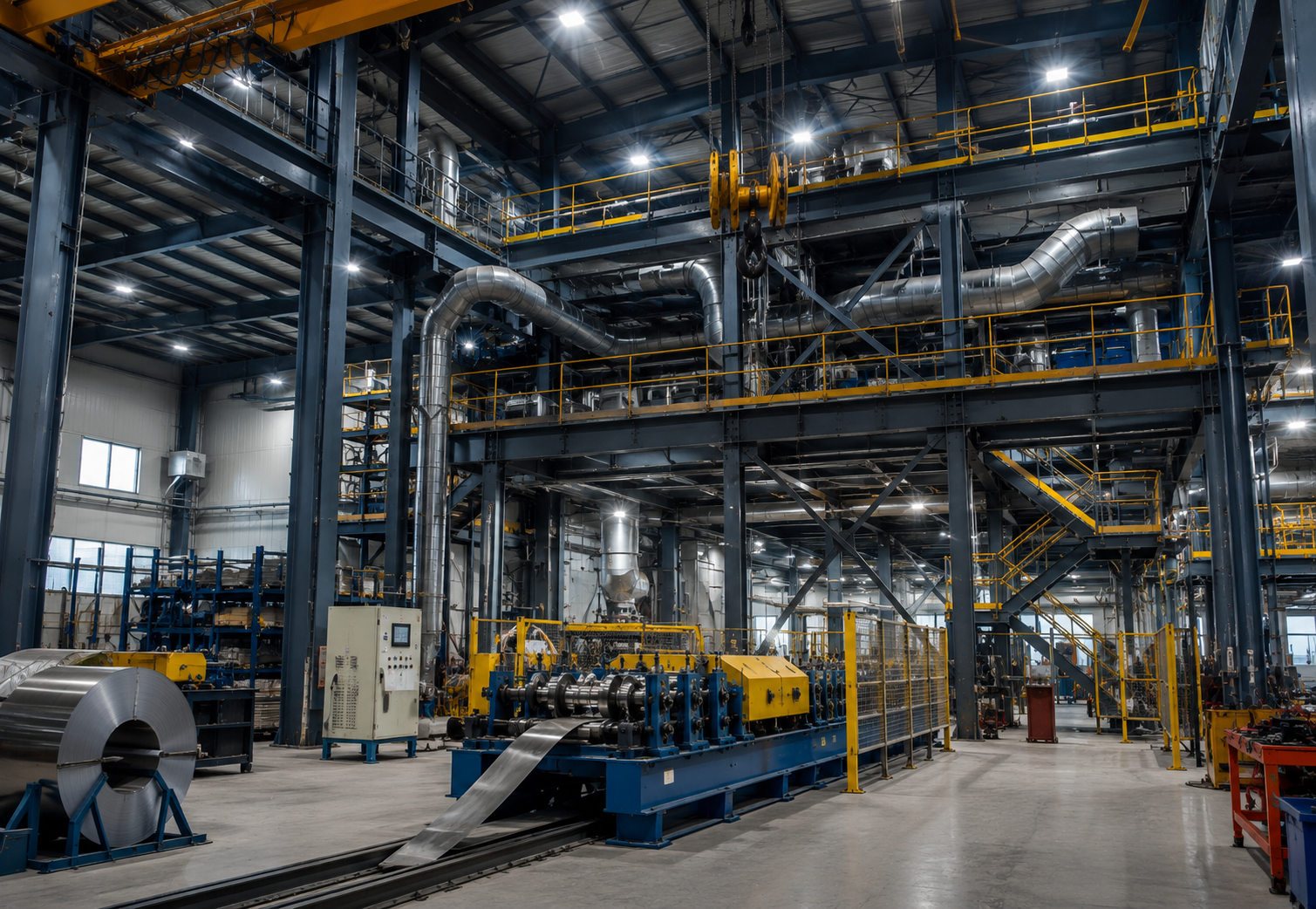
Roll forming gradually bends a strip of metal through a sequence of roll dies to produce a profile with a consistent cross-section. It is often considered for long channels, angles, and similar sections. Punching or notching can be incorporated into a forming line where the part and tooling permit.
At ForMasters, custom roll forming includes in-line pre-punching and computer-controlled cut-to-length operations. Our production equipment and capabilities support a review of your profile and manufacturing requirements.
How Metal Stamping Works
Metal stamping uses a press and dies to cut or form sheet metal. Operations can include blanking, punching, bending, and forming. Progressive dies perform a sequence of operations as strip material advances through stations, with finished parts separated from the strip.
ForMasters provides custom metal stamping, including single-hit and progressive die work. The manufacturing approach depends on your component and production requirements.
Compare the Part Before Choosing the Process
| Question | What to review |
|---|---|
| Does the profile stay consistent along its length? | A long, repeated cross-section is a useful starting point for discussing roll forming. |
| Does the part require several cutting or forming features? | Review the drawing for stamping operations and any steps that can be combined. |
| What quantities are expected? | Include initial and repeat orders when comparing tooling, setup, and production costs. |
| Which dimensions are critical? | Identify functional tolerances, hole positions, mating surfaces, and inspection requirements. |
| What happens after forming? | Include welding, finishing, packaging, and assembly needs in the review. |
Compare the Complete Manufacturing Plan
Request a quote for the finished component rather than comparing a single operation in isolation. Ask what tooling is required, which operations are included, how the part will be inspected, and whether secondary work needs a separate setup.
For a new design, share the drawing revision and distinguish requirements from features that may still change. If you expect several lengths, hole patterns, or related parts, include those variants in the inquiry. This gives the team a clearer basis for reviewing the production approach.
What to Send ForMasters
- Part drawing or profile with critical dimensions and tolerances
- Material grade, thickness, and coating requirements
- Initial order quantity and anticipated repeat demand
- Hole patterns, cutouts, and secondary operations
- Finishing, inspection, and packaging requirements
- Requested delivery schedule
ForMasters in Mentor, Ohio combines manufacturing with in-house tooling support. Send your drawing for a manufacturing quote or call 440.639.9206 to discuss your component.
Process reference: SME, Sheet Metal Stamping Dies & Processes. Process selection requires a review of the specific part and production needs.